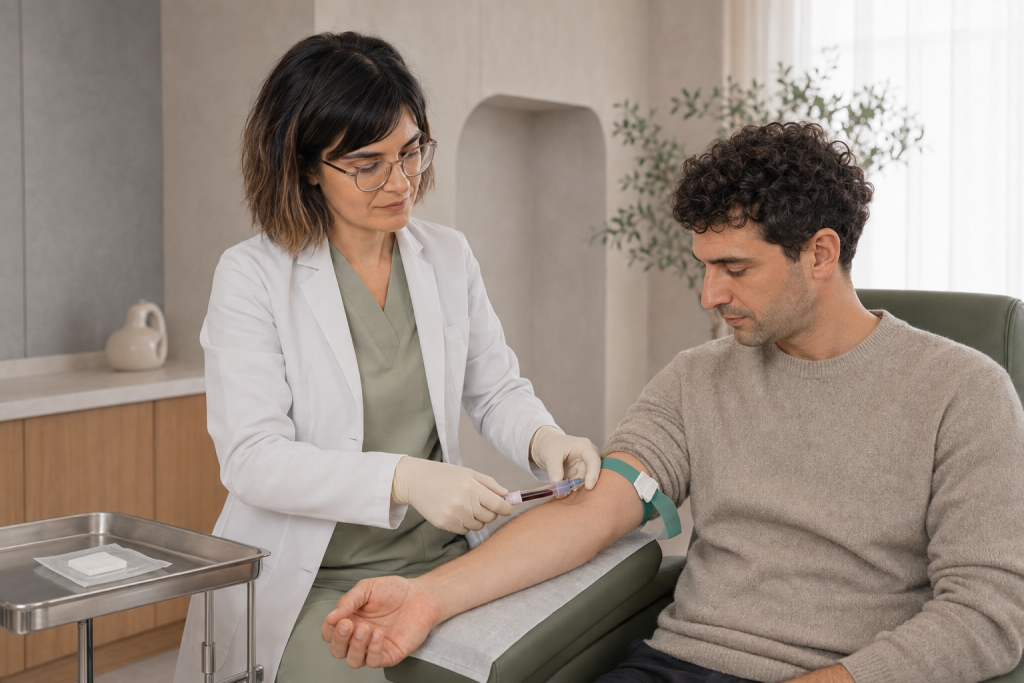
What is PRP, and what is it not?
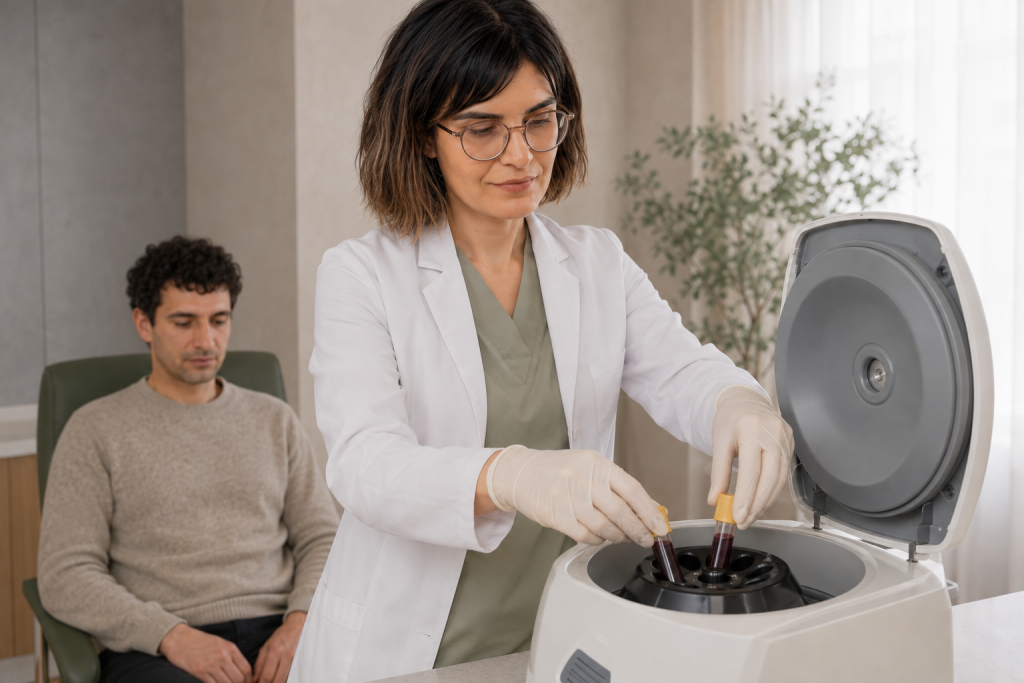
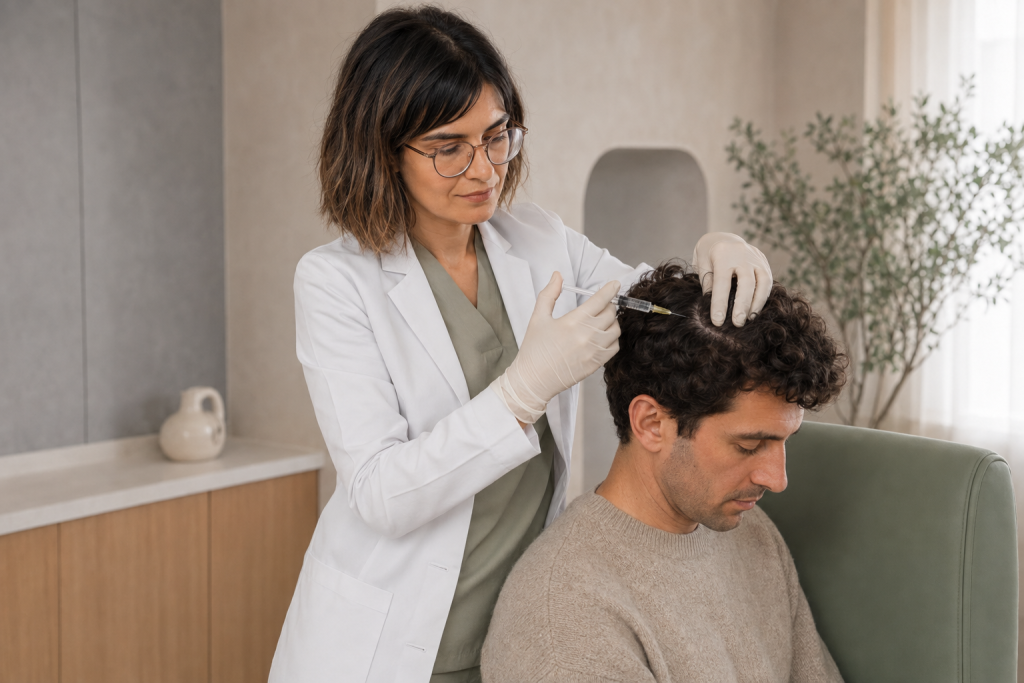
PRP involves separating a blood sample taken from the patient into its components by centrifugation and applying the platelet-rich plasma portion to the target area. It is prepared from the patient's own blood; it is not a stem-cell treatment. The prepared product may vary according to the kit and protocol used.
It may be considered as a supportive option in scalp and selected skin treatments. The expected response varies according to the diagnosis, patient selection, preparation method and accompanying treatments. It should not be expected to produce the same result for every type of hair loss or every skin concern.
- A product prepared from the patient's own blood
- An autologous treatment that is not a stem-cell treatment
- Patient selection according to diagnosis and objective
- Contents that vary with the kit and protocol
- A sterile blood collection and preparation process
- Follow-up according to clinical response
What is assessed before deciding on PRP?
A decision to use PRP alone is not made before clarifying the cause of hair loss or the skin concern. Blood disorders, infection, bleeding tendency, medications in use, pregnancy and breastfeeding, and the health of the treatment area are considered together.

Clarifying the diagnosis
The underlying cause is investigated, particularly in hair loss; if PRP is considered appropriate, it is added to the plan as a supportive option.

Preparation process
Blood collection, centrifugation and product transfer are carried out under sterile conditions and in accordance with the kit being used.

Evidence and expectations
PRP protocols are not standardised; the expected response and level of evidence vary according to the indication.

Follow-up
The injection response, scalp or skin response and accompanying treatments are reviewed at the follow-up examination.
Being prepared from the patient's own blood does not mean it is risk-free
Pain, tenderness, swelling, bruising or headache may occur at the injection site; there are also risks such as infection and nerve or vascular injury. Assessment is required if worsening pain, fever, discharge, widespread swelling or a neurological symptom develops.

1
Assessment of diagnosis and suitability

2
Blood collection, preparation and administration

3
Follow-up of the response and accompanying plan
Frequently asked questions about PRP
No. PRP is platelet-rich plasma separated from the patient's own blood; this does not mean that it contains stem cells or is a stem-cell treatment.
No. The cause of hair loss, patient selection and the treatment protocol affect the outcome. Research findings vary; PRP may be considered as a supportive option for a suitable patient.
No. The kit, centrifugation method and preparation protocol can alter the concentration of platelets and other cells. These differences make it difficult to compare results.
Pain, tenderness, swelling, bruising or headache may occur at the injection site. More serious risks such as infection and nerve or vascular injury are also possible.
Certain blood disorders, active infection, bleeding tendency, some medications, pregnancy or breastfeeding, or active disease in the treatment area may change the plan.