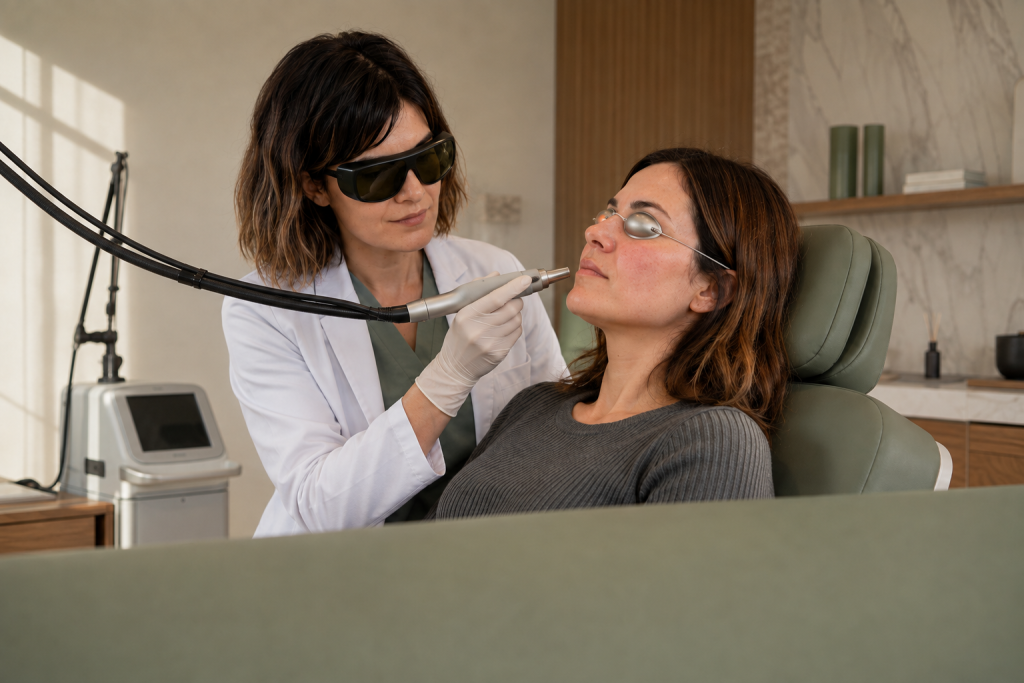
When is a 1064 nm Nd:YAG laser considered?
Because the Nd:YAG laser can be used with different pulse modes and settings, not every Nd:YAG treatment is the same. This page describes only the approach to selected visible vessels using the 1064 nm wavelength.
Vessel diameter, color and depth are considered together with the treatment area, skin tone, tanning, medications in use and previous treatments. Because not all redness is vascular in origin, any underlying dermatological condition is investigated first when necessary.
- This page covers 1064 nm vascular treatment
- Planning according to vessel diameter and depth
- Energy and cooling selected according to skin type
- Appropriate eye protection
- A test area and cautious progression when needed
- Review according to the vessel's response
What is assessed before Nd:YAG laser treatment?
The nature of the visible vessels, skin type and risks are assessed beforehand. Moles or suspicious lesions are not treated directly with the laser; active infection, recent sun exposure and photosensitising medication are also specifically reviewed.
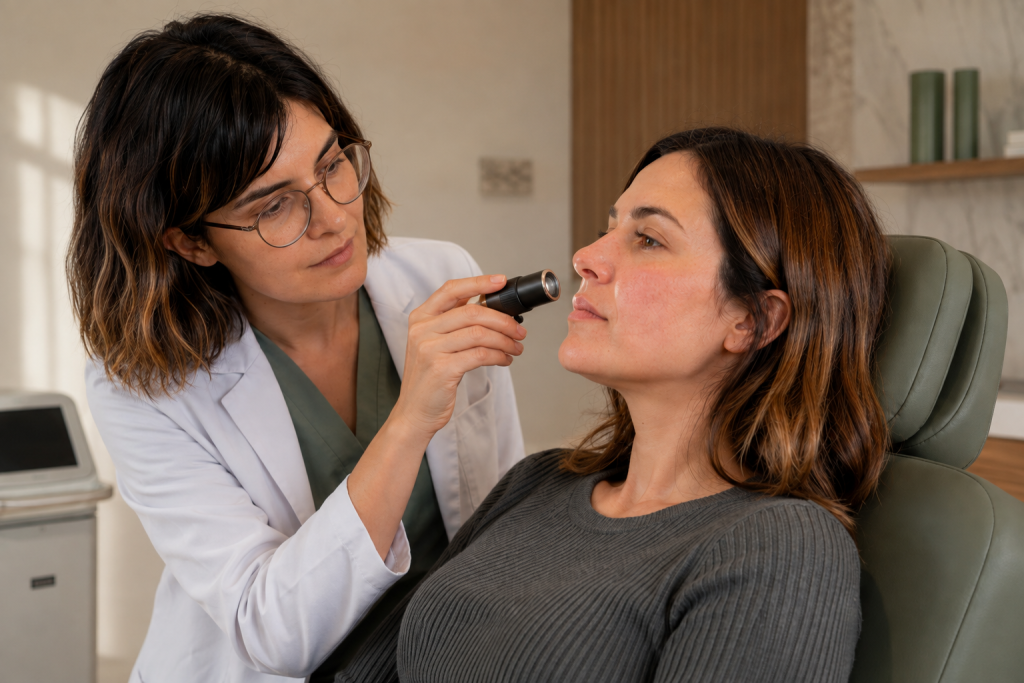
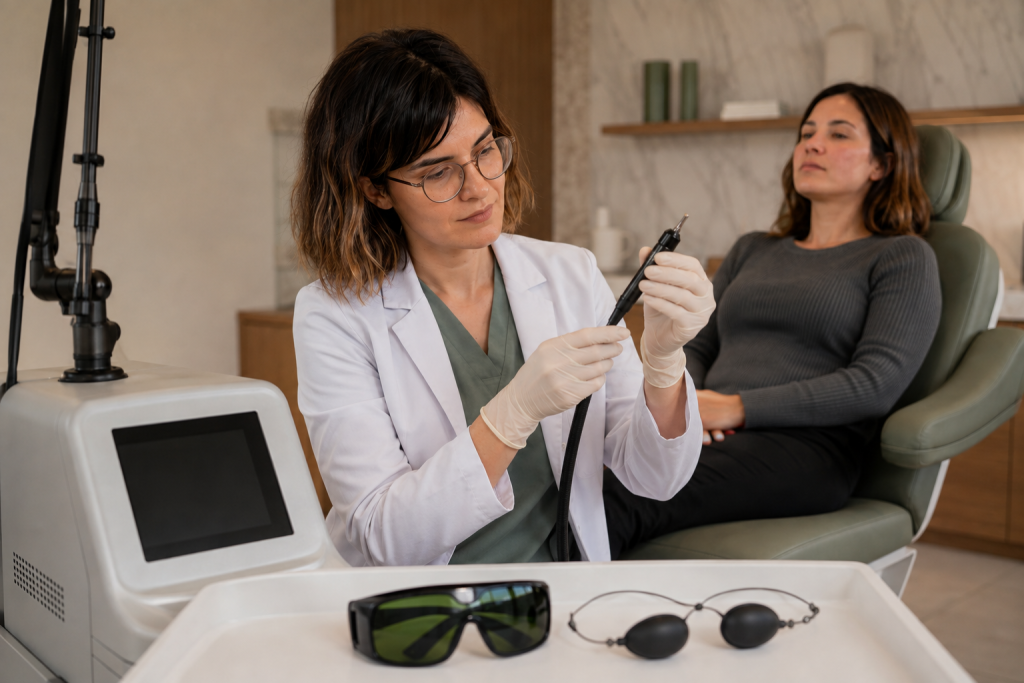

Vascular assessment
Whether the appearance is vascular in origin, its diameter and depth, and the treatment area are assessed.

Parameter selection
Pulse duration, energy, spot size and cooling are determined together according to the skin type and target vessel.

A safety-focused approach
Appropriate protective eyewear, skin cooling and, if needed, a small test area are incorporated into the safety plan.

Monitoring the response
The possibility of temporary redness, swelling, bruising or crusting and the timing of review are explained individually.
What changes may occur after treatment?
Short-term redness, sensitivity, mild swelling or bruising may occur after treatment. Advice on protecting the area from heat and sun is provided according to the individual plan; assessment is required if blistering, increasing pain, a wound or persistent discoloration develops.

1
Assessment of the vessels and skin

2
Treatment with protective measures

3
Review of response and healing
Frequently asked questions about the Nd:YAG laser
It may be considered for selected superficial visible vessels on the face or body. Suitability is determined according to the vessel's diameter, depth, color and location, as well as the skin type.
No. Redness may be associated with rosacea, dermatitis or another condition. The cause must first be assessed dermatologically.
Yes. Protective eyewear appropriate for the laser light is an essential safety measure for both the patient and the practitioner.
The vessel's response varies according to its diameter and depth and the settings used. Temporary darkening or bruising may occur in some vessels; the result is assessed at the follow-up examination.
Active infection, marked tanning, certain photosensitising medications, impaired healing or specific underlying health conditions may require postponing the procedure or changing the plan.