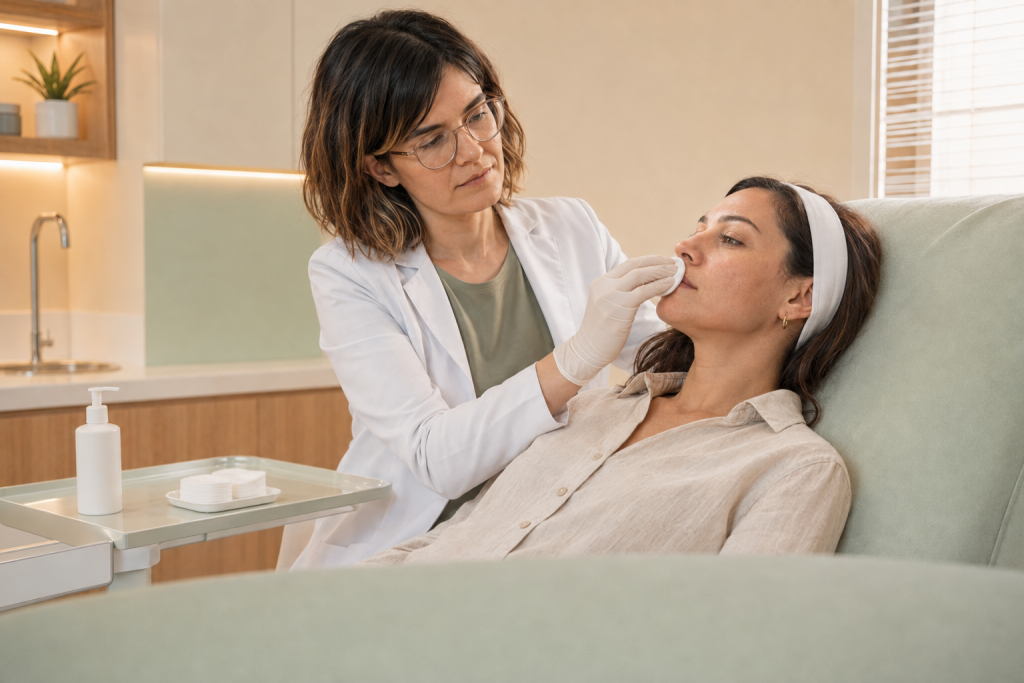
How is medical skin care planned?
Medical skin care is a professional treatment in which steps such as cleansing, exfoliation, comedone care and hydration are selected according to the condition of the skin. The same products or sequence of steps are not used for every patient.
Dryness, oiliness, sensitivity, a tendency to comedones and products in use are assessed together. Skin care may be postponed or simplified in the presence of active acne, rosacea, eczema or marked barrier impairment; it does not replace the diagnosis and treatment of these conditions.
- Skin type and barrier condition
- Reviewing products and treatments in use
- Cleansing and exfoliation steps
- Suitability for comedone care
- Hydration and sun protection
- The possibility of postponing skin care during active disease
What determines the steps in the treatment?
Sensitivity, active lesions, topical or systemic treatments in use and recent procedures alter the content and intensity of skin care. The aim is to support the skin with an appropriate home routine without causing irritation.
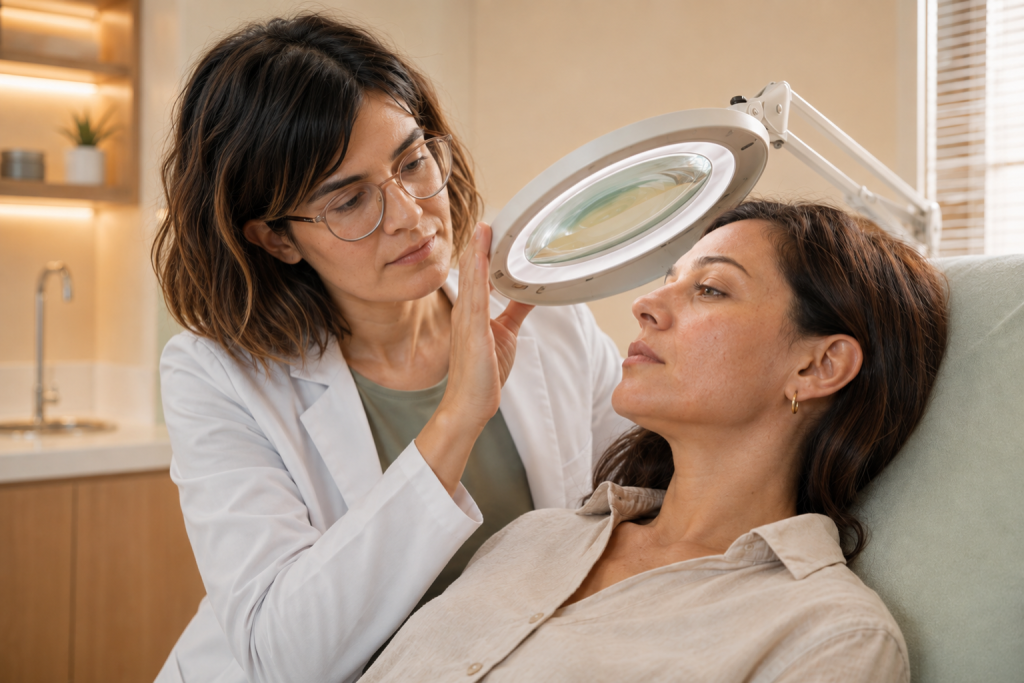
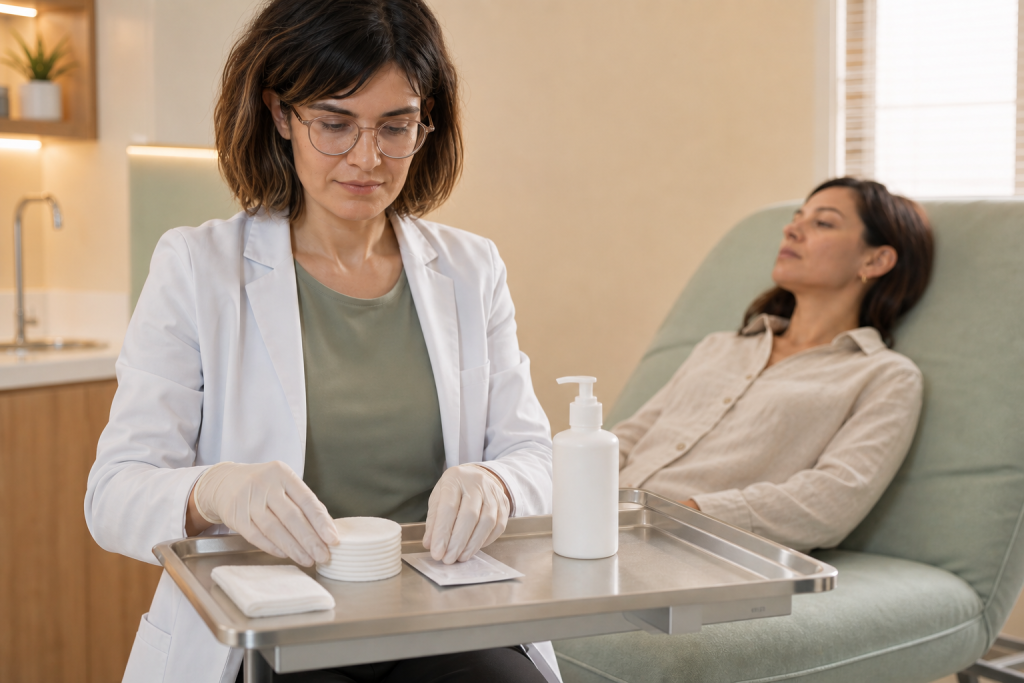

Condition of the skin
Oiliness, dryness, sensitivity, comedones and signs of barrier impairment are assessed before treatment.

Product selection
Ingredients are selected according to allergy history, products in use and ongoing dermatological treatments.

Treatment intensity
Exfoliation, extraction or hydration support is adjusted according to the skin's tolerance.

Home care
A practical routine is created for cleansing, moisturizing and sun protection.
Daily routine after treatment
Short-term redness or sensitivity may occur after treatment. Cleansing, moisturizing and sun-protection routines are adjusted according to the products used. Assessment is required if burning, a widespread rash, swelling or marked deterioration occurs.

1
Reviewing the skin and products

2
Performing appropriate treatment steps

3
Adjusting the home routine
Frequently asked questions about medical skin care
No. Skin care may support skin health and a daily routine, but a dermatological examination is required to diagnose and treat acne, eczema, rosacea or any other disease.
No. Products and treatment steps are changed according to skin type, barrier condition, sensitivity, allergy history and treatments in use.
An appropriate protocol may be considered, but aggressive extraction and irritation are avoided in inflamed or widespread acne. The dermatological treatment plan takes priority.
Products that may irritate the skin can be reduced for a period; gentle cleansing, moisturizing and sun protection are recommended. Details are provided according to the protocol used.
A simpler, lower-intensity approach may be selected for sensitive skin. Treatment may be postponed in the presence of active eczema, a rosacea flare, infection or marked barrier impairment.